
Minehut Review 2026
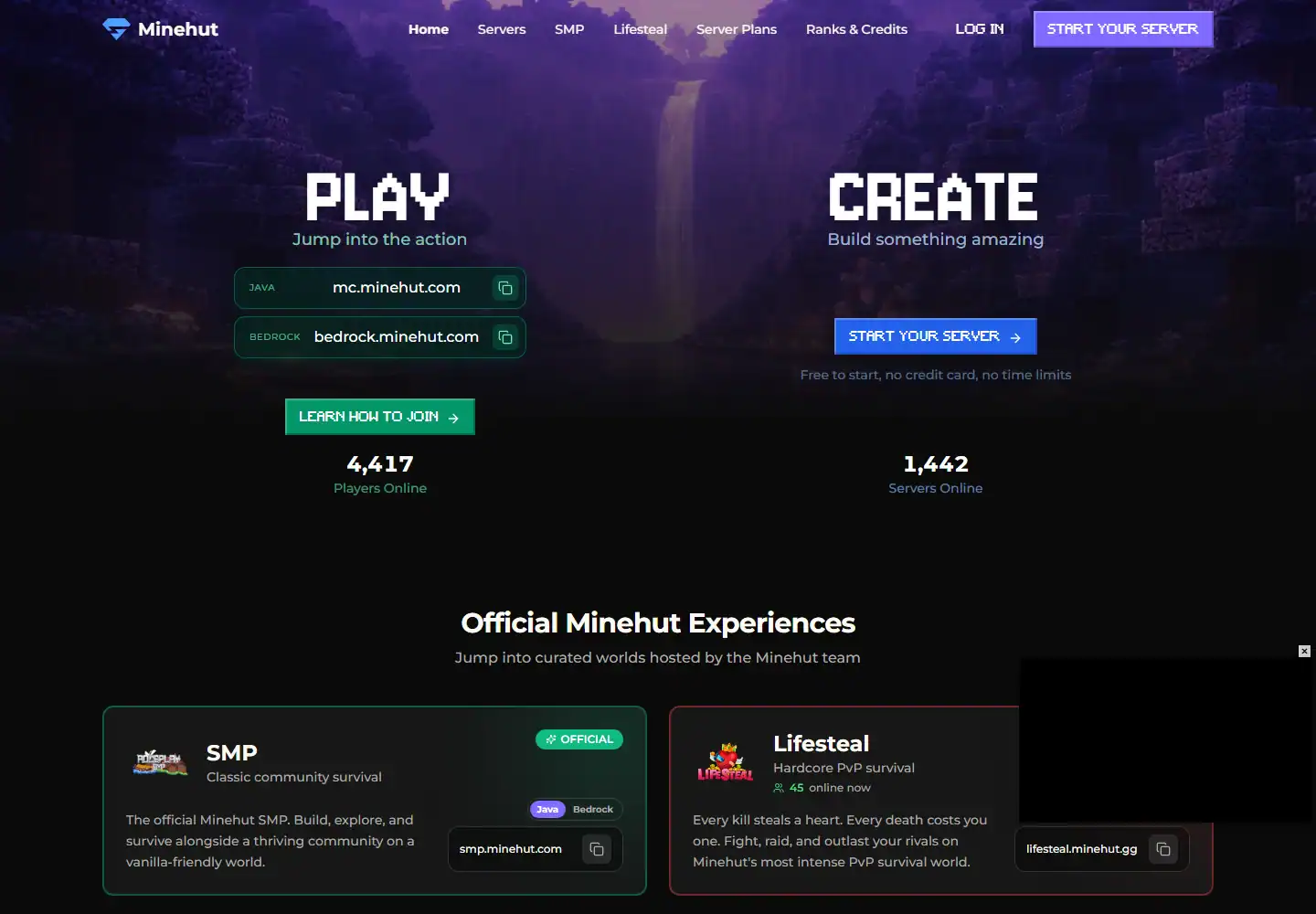
We tested Minehut as a real customer, set up a server and spent most of the review inside the control panel using plugin tools. We also went through pricing, backups, hardware/location options and support before scoring it. Our Minehut review started in Minehut dashboard, not on the marketing site. We worked through plugin management and network settings and used the server like we normally manage one after setup. Minehut is not just a Minecraft host, it is a hosting platform attached to a large server-discovery network. That distinction is why the free tier can still make sense even when the raw server specs are modest. In 2026 every account can create up to five free servers with 1GB RAM and 10-player limits, and there are no playtime limits anymore. The problem is that the July platform changes triggered heavy community backlash, and Minehut’s current Trustpilot score is among the weakest in our entire review index.
Quick verdict
Our experience with Minehut
After testing Minehut ourselves, our score is based on how the service behaved once we were actually inside the panel, managing the server and dealing with support, not on the feature list alone.
The free product has also improved in one important way: Minehut removed the old playtime limit. Free servers now sleep when empty rather than running against a daily time allowance, and users can create up to five free servers with 1GB RAM and 10 player slots each.
But the platform is in a difficult transition. Trustpilot was around 1.5/5 when we checked, and many July/August 2026 reviews are angry about new limits, server-slot changes, external-server pricing and stricter platform rules. We cannot ignore that simply because the free tier still exists.
Minehut at a glance
The important stuff before you buy
Score breakdown
Where the 7.8 comes from
Pricing and value
What the current price really buys
When we priced Minehut, we configured the same kind of server we had just tested and followed it through checkout. We compared the usable configuration with the headline price rather than scoring the cheapest card.
We went through the Minehut pricing flow after the hands-on test and checked what the configuration actually cost once the useful RAM, location and server options were selected. Starter remains free with 1GB RAM and 10 players. Standard costs 600 credits/month for 2GB, Pro 1,800 credits for 6GB and Ultimate 6,000 credits for 14GB. Only Ultimate is explicitly 24/7; Standard and Pro sleep when empty.
The credit system makes comparison harder than a normal dollar price, especially when credits are also used elsewhere in the Minehut ecosystem. We prefer hosts that tell us the exact monthly currency cost without an internal wallet between us and the bill.
The July 2026 changes also reduced the number of free servers to five and changed external-server economics. Minehut argues that these changes were necessary to remove free playtime limits and support moderation/infrastructure. Existing long-term users understandably judge the trade differently because some had built workflows around the old rules.
| Plan / example | What you get | Current price |
|---|---|---|
| Free | 1GB / 10 players | £0 |
| Pro | 6GB | 1800 credits/mo |
| Ultimate | 14GB / 24/7 | 6000 credits/mo |
Prices and product details were checked in September 2026 and can change. We compare the configured server, not just the cheapest headline card.
Control panel
Minehut dashboard: what it is actually like to use
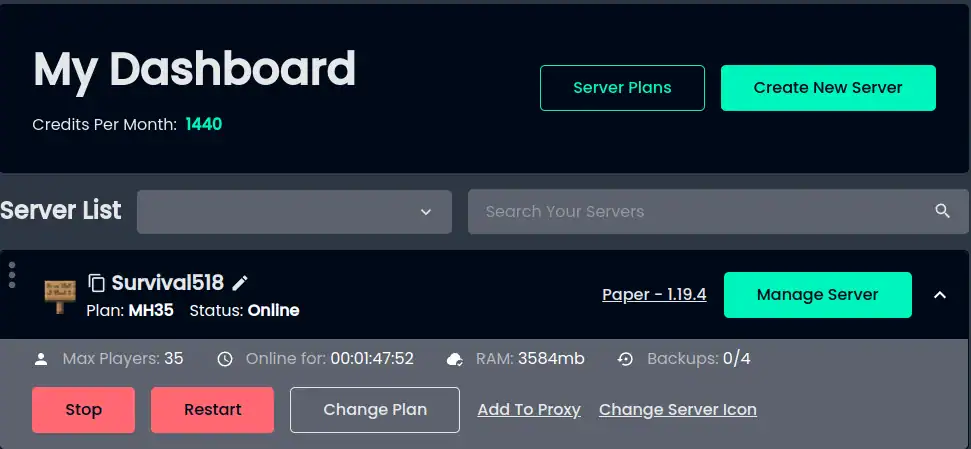
When we opened the Minehut panel, we skipped the tour and used plugin tools straight away. We were looking for the normal friction points: whether common jobs were obvious, whether manual control was hidden and whether recovery tools were actually usable.
After using plugin tools, our first impression was based on the workflow rather than the dashboard styling. Minehut’s dashboard is beginner-focused and connected tightly to the wider network. Server settings, plugin management and plan upgrades are designed for owners who may never have touched a traditional game-server panel.
The provider-specific screenshot in our Media Library shows the modern dashboard well. We found it easier to understand than a legacy panel, but it also reminds us that Minehut is a platform with its own rules rather than a neutral rented server.
That distinction matters once a server grows. You are not only managing Minecraft; you are participating in Minehut’s network, moderation and credit ecosystem. Some owners love the built-in audience. Others eventually want the independence of a conventional host.
Hands-on take
What stood out after using Minehut
For a new public server idea, Minehut is still fun to experiment with. We can create the server for free, install plugins, publish it into a network with existing traffic and see whether anyone actually cares before spending heavily.
For a private friend group, we are less convinced. One gigabyte is restrictive, and the main thing that makes Minehut special – discovery – may not matter at all. In that use case, a free host with more RAM can be a better fit.
We also downloaded important files regularly. Platform rules and product limits have changed materially in 2026, and recent user frustration shows how painful ecosystem changes can be when a server owner has built years of projects around one provider.
Minehut’s free discovery model is hard to compare with ordinary hosting because some of the value is audience rather than compute. A one-gigabyte server that gets real players can be more useful to a creator than an eight-gigabyte private box nobody discovers. That is why we do not rate Minehut purely from RAM pricing.
At the same time, ecosystem value creates ecosystem risk. Changes to moderation, external-server pricing or discovery rules can affect a community even when the underlying Minecraft process is healthy. That is the core trade-off: Minehut can help you grow, but it also has more power over how that growth happens.
Hardware and locations
What we care about underneath the panel
We checked the hardware and location options that were actually available to our Minehut server instead of giving credit for the best CPU or datacentre named anywhere on the marketing site. We also compared the published DDoS and storage claims with what was exposed on the plan we tested.
During the test, we checked the server/location information available to us against Minehut’s published infrastructure claims. Minehut abstracts the infrastructure heavily. The plans describe RAM, CPU class and uptime behaviour rather than named processor models or datacentre choices. That fits a platform product, but it makes direct performance comparison harder.
Java and Bedrock crossplay through the Minehut network is a practical advantage, and DDoS protection plus backups are part of the current plan messaging. The network also claims more than 250,000 monthly users passing through its lobby ecosystem.
We did not choose Minehut for a server where we need a guaranteed location or specific CPU. We chose it when the network itself is part of the product.
Support and reputation
Our actual support experience
We tested support with a real technical server issue and scored the interaction on two things: how quickly a human replied and whether the answer actually moved the problem forward.
We opened a support ticket with Minehut about a mod/plugin startup and configuration issue and got a human reply after a few hours. The support test was one of the weaker parts of the review. The response took too long and did not resolve the technical question as cleanly as we expected.
Minehut replies to many of those reviews and explains the rationale behind the July changes: removing daily playtime limits required tighter free-server caps, while external pricing and verification changes were tied to infrastructure and trust-and-safety costs. The explanations are useful, but they do not erase the fact that many long-term users dislike the new direction.
There are still positive recent reviews praising free hosting, discovery and helpful staff. Our conclusion is not that Minehut is unusable. It is that the platform is currently polarising, and anyone building a serious community should understand that Minehut’s ecosystem rules can change in ways a plain hosting contract usually does not.
Pros and cons
What we liked and what held it back
- ✓ Up to five free servers
- ✓ No free-plan playtime limit anymore
- ✓ Built-in server discovery network
- ✓ Java and Bedrock support
- ✓ Beginner-friendly dashboard
- ✓ Unique path for growing a public community
- ✗ Very weak current Trustpilot score
- ✗ Credit pricing complicates comparison
- ✗ Free servers only have 1GB RAM
- ✗ Recent platform changes upset many long-term users
Who should buy it?
Is Minehut the right fit?
Compare by game
See the best hosts for your game
FAQ
Minehut frequently asked questions
How many free servers can Minehut users create?
What does a free Minehut server include?
What are Minehut’s paid plans?
Why are recent Minehut reviews so negative?
Who is Minehut best for?
Final verdict
Do we recommend Minehut after testing it?
We still used Minehut for experimentation and discovery. There is genuine value in being able to launch for free and immediately exist inside a large Minecraft network.
We were cautious about building a business-critical server entirely around it. The 2026 changes show that Minehut is a living platform with rules and economics that can shift. Use the ecosystem because it helps you, not because you assume it will never change.
Affiliate disclosure: provider links may earn us a commission at no extra cost to you. Scores are based on product quality and value, not commission size.

I use and review game-server hosts from a buyer’s perspective: how the account feels, what the panel actually lets you do, how clearly plans are priced and whether the hardware, locations and support justify the bill.